Homeowners in New Braunfels and the surrounding Central Texas region must select pool deck coatings that withstand high UV exposure and significant thermal expansion. This comparison evaluates two primary options: Revaflex EPDM rubberized coatings and traditional epoxy systems. Analyze the technical specifications and performance data below to determine the appropriate material for your residential outdoor space.
Technical Overview of Material Composition
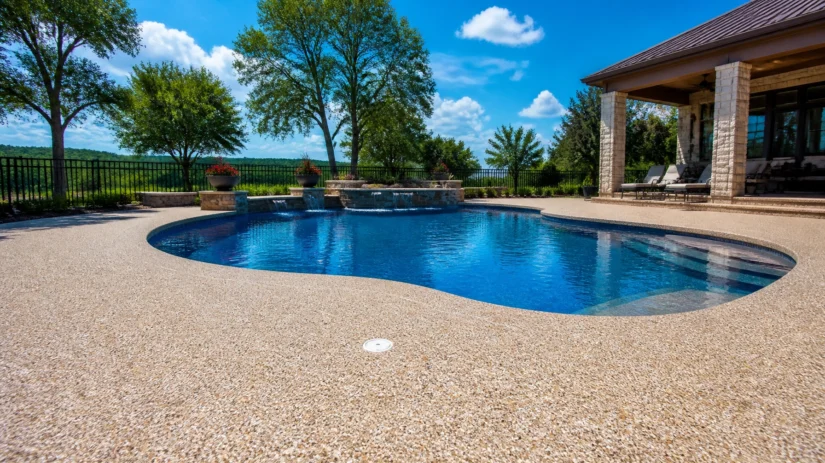
Revaflex EPDM (Ethylene Propylene Diene Monomer) is a synthetic rubber granulated system. The installation process involves mixing colored rubber granules with a specialized binder to create a seamless, porous surface. This material is engineered specifically for outdoor environments subject to moisture and heat.
Traditional epoxy is a rigid thermoset plastic. It is formed by reacting an epoxide resin with a polyamine hardener. While common in indoor garage applications, its chemical structure presents specific limitations when applied to outdoor concrete surfaces in Texas.
Heat Management and Thermal Conductivity
Surface temperature is a critical safety factor for pool decks. Central Texas temperatures frequently exceed 100°F, leading to concrete surface temperatures that can cause thermal injury to bare feet.
- Revaflex EPDM Performance: This rubberized coating stays up to 40°F cooler than standard bare concrete. The low thermal conductivity of EPDM rubber prevents the surface from absorbing and retaining heat at the same rate as rigid resins.
- Traditional Epoxy Performance: Epoxy creates a dense, non-porous film that acts as a heat sink. In direct sunlight, smooth epoxy surfaces reach high temperatures quickly. This often requires the use of footwear to navigate the deck safely during peak daylight hours.
To view available light-reflecting color blends, visit the Color Mix Options page.

Slip Resistance and Safety Standards
Pool decks are classified as high-moisture zones. Slip resistance is measured by the Coefficient of Friction (COF).
- Revaflex EPDM: This system achieves a COF rating of 0.6 or higher. The granular texture provides mechanical traction regardless of moisture levels. The material remains slip-resistant even when submerged or saturated with water.
- Traditional Epoxy: Untreated epoxy is inherently smooth and becomes a significant slip hazard when wet. To achieve safety compliance, installers must broadcast sand or decorative flakes into the wet resin. Over time, these additives can wear down or delaminate, reducing the overall safety of the surface.
For families with small children, safety is a primary administrative priority. Review more about family safety on our Safe Pool Deck Surfaces for Kids page.
Flexibility and Structural Integrity
Central Texas soil is known for high clay content, which causes concrete slabs to shift, expand, and contract.
Rigid Systems (Epoxy)
Epoxy is a rigid material. When the underlying concrete develops hairline cracks due to thermal movement or soil shifting, the epoxy layer cannot flex. This results in "reflective cracking," where the crack in the concrete mirrors through the coating. Once the seal is broken, water can penetrate the substrate, leading to delamination and peeling.
Flexible Systems (Revaflex EPDM)
Revaflex is a flexible membrane. It expands and contracts in synchronization with the concrete substrate. This elasticity prevents the formation of surface cracks. The material bridges existing minor imperfections in the concrete, eliminating the need for extensive demolition.
Comfort and Force Reduction
Force reduction refers to the ability of a surface to absorb impact energy. This is measured to determine the level of strain placed on joints and feet.
- Impact Absorption: Revaflex EPDM provides a 45% force reduction compared to bare concrete or traditional epoxy. This cushioning effect reduces physical fatigue during extended periods of standing or walking.
- Texture: The rubber granules provide a soft, tactile feel. Unlike epoxy, which is hard and unforgiving, the EPDM system is designed for barefoot comfort in high-traffic residential areas.
UV Stability and Longevity
The Texas sun emits high levels of ultraviolet (UV) radiation, which degrades many chemical polymers.
- UV Resistance: Revaflex EPDM is UV-stable. It does not yellow, chalk, or fade when exposed to prolonged sunlight. The color is integrated into the granules, ensuring long-term aesthetic consistency.
- UV Degradation in Epoxy: Most traditional epoxies are not UV-stable. Without an expensive aliphatic urethane or polyaspartic topcoat, epoxy will undergo a chemical breakdown. This typically manifests as yellowing within the first 6–12 months of exposure.
V & B Surface Solutions provides a lifetime warranty on Revaflex installations to address long-term durability concerns. Visit the About Us section for warranty details.

Installation and Turnaround Time
Administrative efficiency is a priority for homeowners who wish to minimize property downtime.
- Revaflex Process: Most projects are completed in 1–2 days. The system is applied directly over existing concrete, avoiding the mess and expense of demolition. The surface is typically ready for foot traffic within 24 hours of completion.
- Traditional Epoxy Process: Epoxy installation often requires multiple stages, including mechanical grinding (shot-blasting), primer application, base coat, flake broadcast, and multiple topcoats. Each layer requires specific curing times, which can extend the project duration to 3–5 days depending on humidity levels.
Maintenance Requirements
Utilize the following maintenance protocols to ensure surface longevity.
- Routine Cleaning: Use a garden hose or a low-pressure power washer to remove debris and dirt. Mild household detergents are acceptable for localized staining.
- Chemical Resistance: Revaflex is resistant to standard pool chemicals, including chlorine and salt.
- Epoxy Maintenance: Epoxy requires frequent inspections for chips and cracks. If the topcoat is compromised, it must be sanded and reapplied to prevent further delamination.

Comparative Summary
| Feature | Revaflex EPDM | Traditional Epoxy |
|---|---|---|
| Heat Management | Up to 40°F cooler | Retains high heat |
| Slip Resistance | 0.6+ COF (Naturally Non-slip) | Slippery when wet (Requires additives) |
| Flexibility | Highly flexible; resists cracking | Rigid; prone to cracking |
| Force Reduction | 45% (Cushioned) | 0% (Hard) |
| UV Stability | High (No yellowing) | Low (Yellows without topcoat) |
| Installation | 1-2 Days | 3-5 Days |
Action Steps for New Braunfels Homeowners
To upgrade your outdoor surface, follow these instructions:
- Identify the surface area: Measure the square footage of your pool deck or patio.
- Select a color blend: Review the Showcase to see real-world applications of various color options.
- Request a professional assessment: Visit the Request Quote page to submit your project details.
- Schedule installation: Coordinate with the V & B Surface Solutions team to finalize a 1-2 day installation window.
For further information on specific applications, navigate to the Pool Decks or Patios service pages.