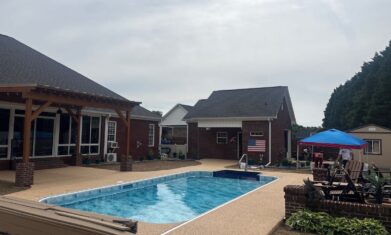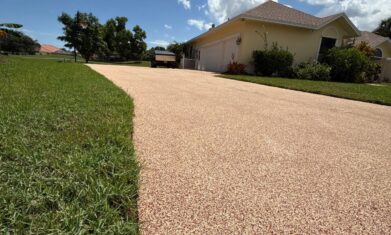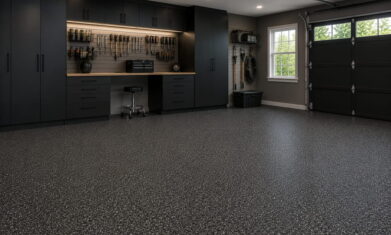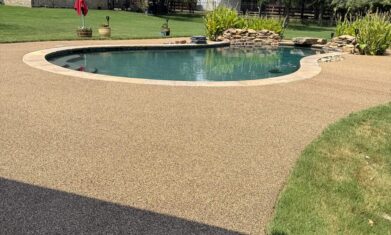
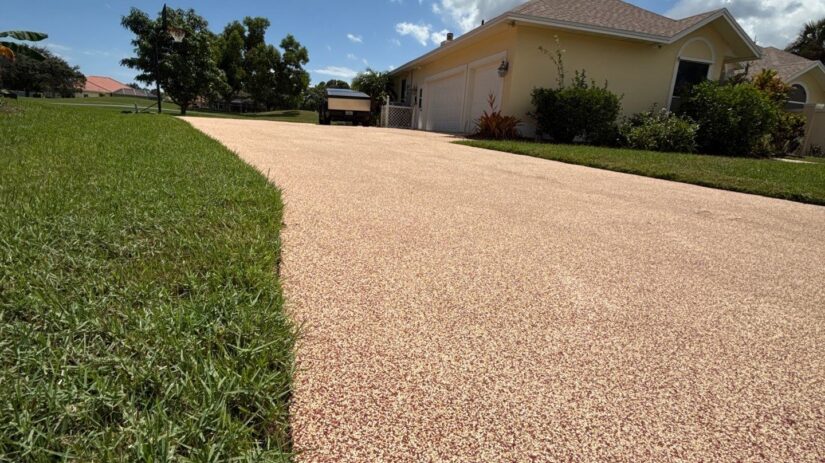
Choose a driveway color by comparing the coating with your home, considering how the surface will look in full sun, and deciding how much everyday dust and tire marking you want the color to disguise. For New Braunfels and Central Texas homes, the right choice should also account for heat, limestone, brick, and other exterior materials.
V & B Surface Solutions installs Revaflex EPDM concrete coating over existing concrete in many cases, without demolition. The system is available in solid colors and pre-mixed blends. Use this guide to compare options and prepare for an in-person sample review.
View concrete driveway colors in outdoor light
A color sample can look different indoors than it does across a full driveway. Texas sunlight can make colors appear lighter or warmer. The size of the surface, the coating’s texture, nearby landscaping, and shadows also affect how you perceive the color.
Do not choose a driveway coating color from a screen or a small indoor sample alone. Review a physical sample outdoors, next to your home, and at different times of day. Compare it in direct sun and shade. If possible, view it when dry and damp.
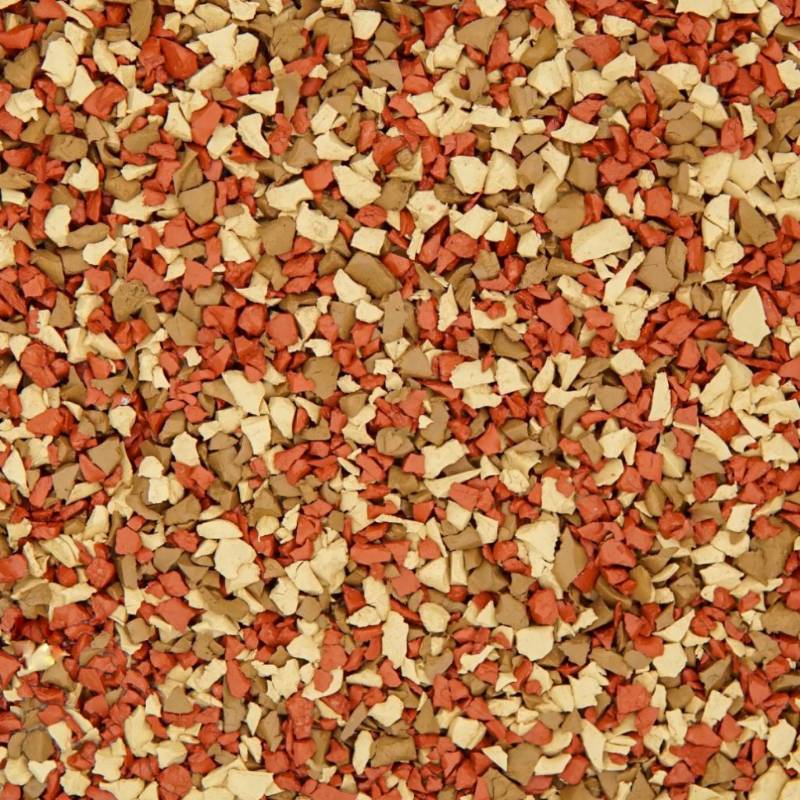
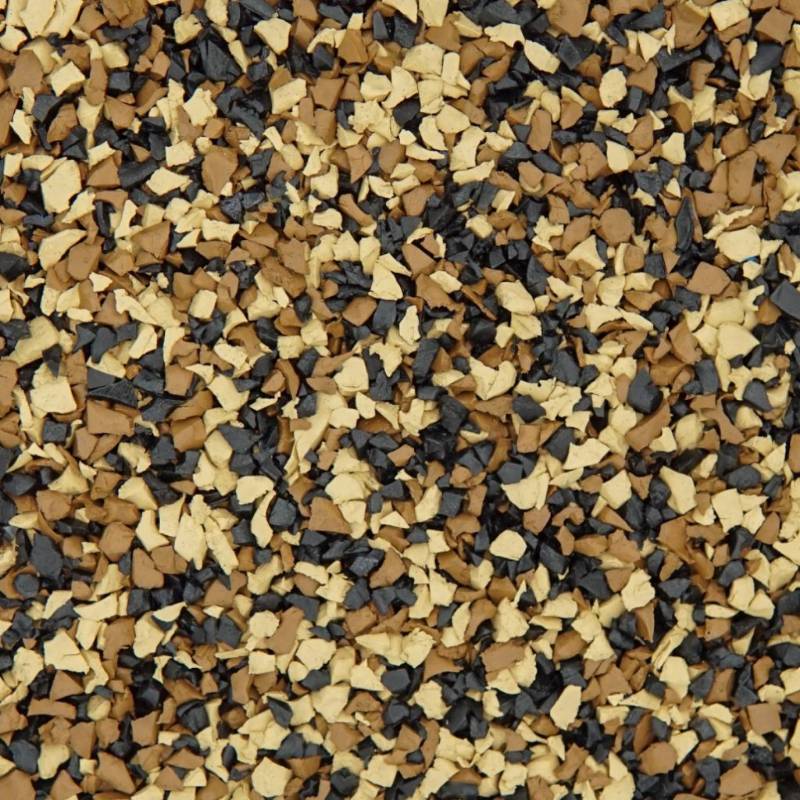
EPDM blends contain granules in several colors. From a distance, they may read as one overall shade; up close, the individual granules are visible. Check both views before deciding.
Match the coating to your home’s exterior
Look at the fixed colors around the driveway before selecting a blend. Compare the sample with your brick, stone, stucco, roof, garage door, trim, and front entry. Choose a color that connects with those materials rather than competing with them.
- Limestone and other light stone: Compare earth tones such as Santa Fe, Sandstone, and Sandalwood. Their tan and brown notes can complement the warm neutrals common around the Hill Country.
- Warm or dark brick: Try a blend with tan, brown, or terracotta notes. A sample such as Santa Fe can relate to warm brick, while a medium brown blend may provide contrast against darker brick.
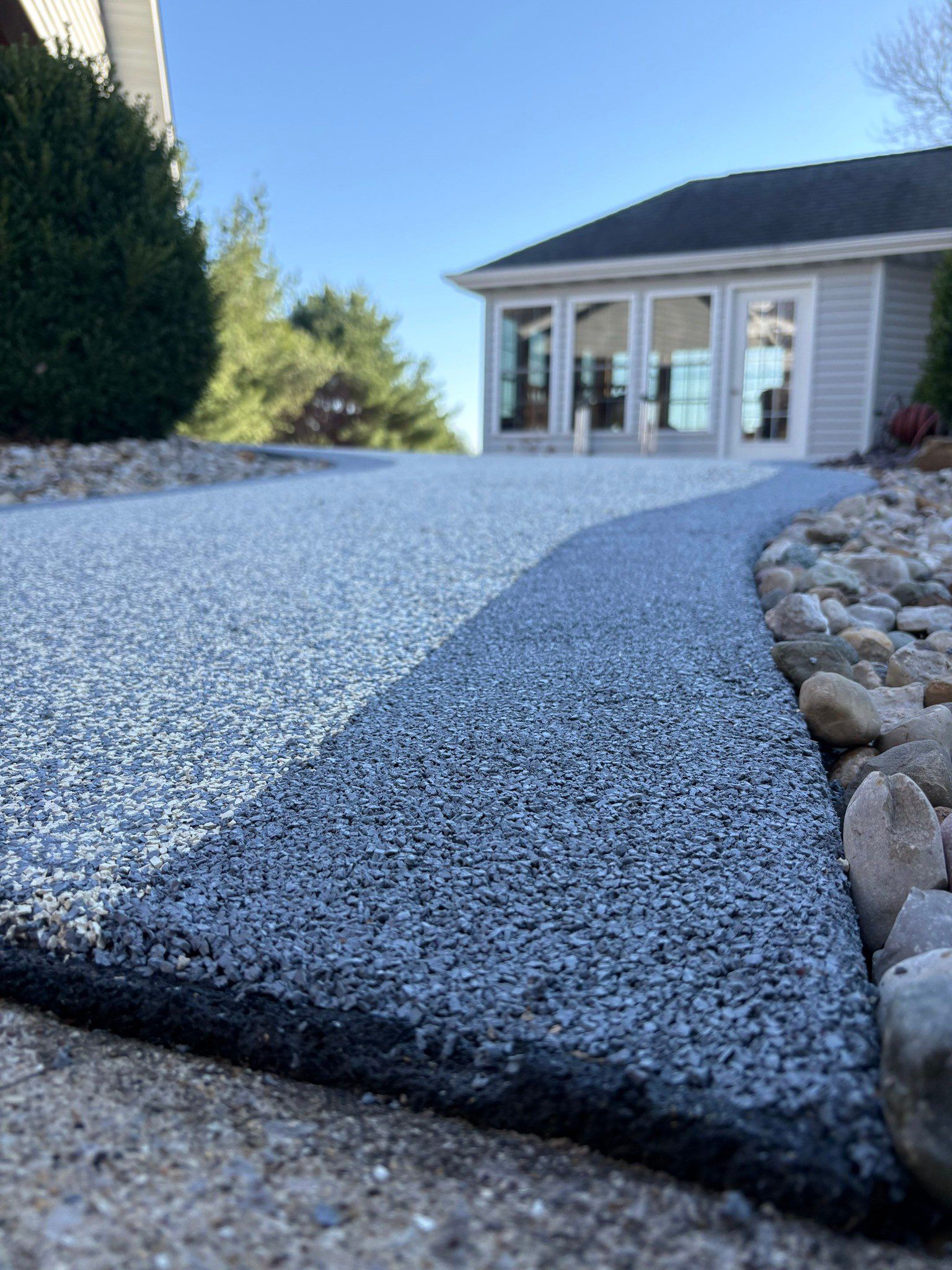
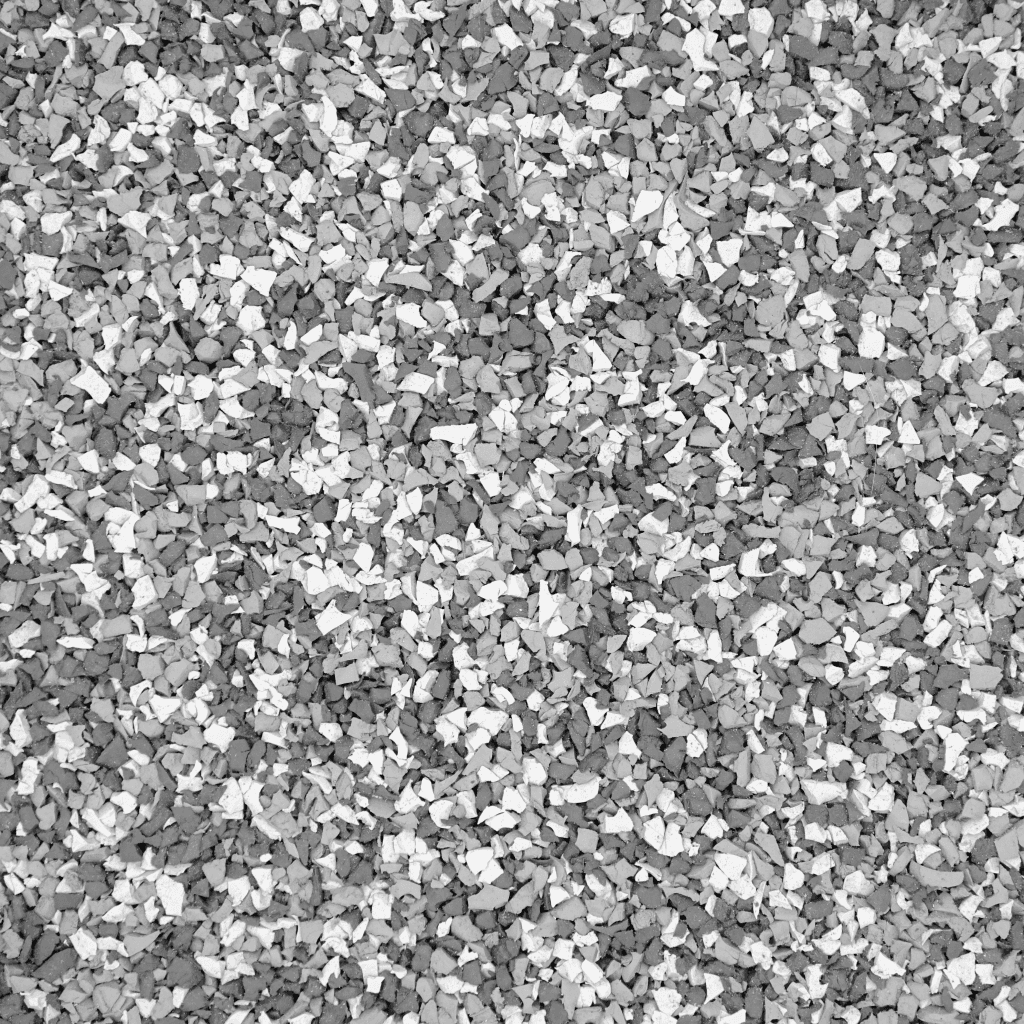
- Gray-and-white exteriors: Review gray blends such as Sterling, Nickel, and Platinum. Check each against the home’s trim and garage door; gray samples can vary in warmth.
- Contemporary exteriors: A solid dark option such as Pave - Black makes a stronger contrast. Slate offers a dark, speckled appearance rather than a solid finish.
These are starting points, not fixed rules. Compare each sample with the actual materials and colors on your home.
Consider dust, tire marks, and everyday wear
Every driveway collects dust, leaves, and tire marks. A color blend with multiple tones can break up the appearance of small amounts of debris. Medium earth tones and speckled gray blends are practical options to compare if you want everyday dust and light marks to be less noticeable.
Very light colors may make dark tire marks or soil stand out. Very dark colors can make dust, pale mineral deposits, or dried water spots more visible. A solid color also creates a more uniform field, so stains and surface changes may be easier to pick out than on a mixed blend.
Clay soil around Central Texas can leave reddish dust near the driveway. If that is a regular issue at your property, test a tan, brown, or mixed-color sample beside the actual soil and landscaping. No color will hide every mark. Regular cleaning and prompt attention to spills still matter.
Weigh color against sun and surface heat
In general, lighter pavement colors reflect more sunlight than darker ones. That can make light gray, beige, tan, and cream options more comfortable underfoot in full sun. Dark gray, black, and deep brown absorb more solar energy and can become hotter.
Actual surface temperature depends on more than color. Shade, wind, moisture, surface texture, and the specific coating system also affect it. If heat is a priority, compare light and medium samples at your home and ask V & B about expected performance for the selected finish. For general background, the U.S. Environmental Protection Agency’s cool pavement resource explains how pavement reflectivity relates to heat.
A lighter color may show tire marks more readily, while a dark color may absorb more heat. Compare these trade-offs before you choose.
Compare popular driveway coating colors
V & B offers both solid colors and pre-mixed color blends. Review the complete color options and use these style groups to narrow your selection:
Earth-tone blends
Santa Fe, Sandstone, and Sandalwood are options to compare with limestone, warm brick, and other natural finishes. Their mixed tones can create a less uniform appearance than a solid color. Check how the blend looks from the street as well as up close.
Gray blends
Sterling, Nickel, and Platinum suit homeowners who want a gray-based finish to coordinate with gray siding, white trim, or a modern exterior. Compare the samples directly with your garage door and trim, since nearby grays may have different undertones.
Dark finishes
Pave - Black provides a solid dark option. Slate is a dark, mixed blend. Both can create a strong contrast with a light exterior. Because dark colors absorb more sunlight, compare them with lighter samples in direct sun before choosing.
Ask about fade resistance and care
Bare concrete does not have an applied color finish to fade, but its appearance can change with dirt, stains, and weathering. Colored or stained concrete can also change over time; its color retention depends on the coloring method, surface protection, and exposure.
V & B describes its Revaflex EPDM concrete coating as fade-resistant and designed for Texas sun. Treat “fade-resistant” as a performance feature, not a promise that color can never change. Ask how the selected blend is expected to perform in full sun and what care the finished surface requires. V & B offers a lifetime warranty; request the current written terms to confirm its coverage and exclusions for your project.
Use this sample-check process
Before approving a color, complete these steps:
- Request a physical sample. Confirm that it represents the color blend you are considering.
- View it outside. Check morning, midday, and late-afternoon light.
- Place it beside the house. Compare it with the brick, stone, stucco, roof, garage door, trim, and nearby soil.
- Step back. Check the sample from the street and from the garage. Then inspect its granule pattern up close.
- Compare at least two tones. Include a lighter and a medium or darker option so you can weigh heat, contrast, and visibility of everyday dirt.
- Ask about installation and warranty details. Confirm how the existing concrete is evaluated and prepared, how long the project is expected to take, and what the written warranty covers.
Choose a color that works across the whole driveway
The best driveway color for Texas depends on your home’s exterior, sun exposure, and maintenance preferences. A medium earth-tone or gray blend can be a useful starting point if you want to coordinate with Central Texas materials and avoid the high contrast of a solid dark finish. Compare lighter options if surface heat is a priority.
V & B installs Revaflex EPDM concrete coating over existing concrete in many cases, with projects typically completed in 1–2 days. Review the driveway and walkway coating service and color options, then request an assessment for your driveway.