A backyard pool should be a place to relax, entertain, and enjoy time with family. However, the hard surfaces surrounding a pool can become slippery when wet, uncomfortable under bare feet, and increasingly worn as they are exposed to sunlight, water, pool chemicals, and changing weather.
A professionally installed rubber pool deck coating can improve the safety, comfort, and appearance of an existing pool area. The textured, resilient surface creates a more forgiving alternative to bare concrete while giving homeowners an opportunity to refresh an aging or unattractive pool deck.
Below, we explore the principal benefits of rubberized pool decking and what homeowners should consider before choosing it for their property.
What Is a Rubber Pool Deck Coating?
Rubber pool deck coating is a resilient surfacing system generally made with rubber granules and a specialized binding material. EPDM rubber is frequently used for outdoor applications because it is designed to withstand weather exposure while maintaining flexibility.
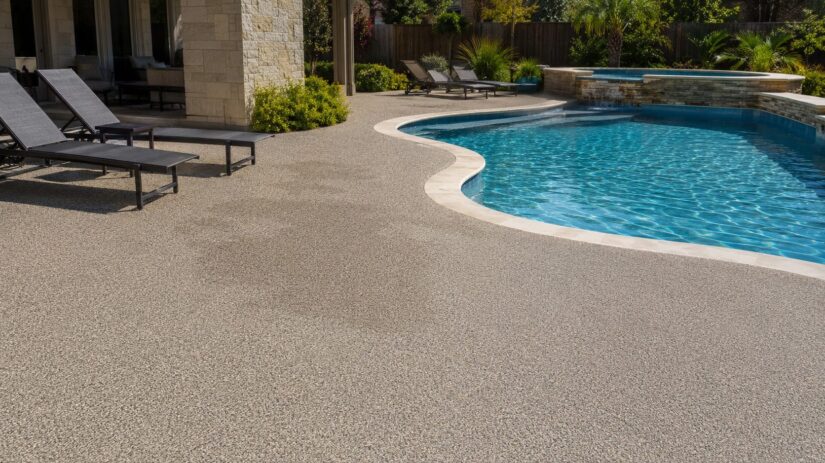
The mixture is applied over a properly prepared surface to create a seamless, lightly textured finish. Depending on the condition of the existing deck and the selected system, rubberized surfacing may be installed over concrete and certain other stable substrates.
Unlike a thin layer of paint, a poured rubber surface creates a thicker and more cushioned layer over the deck. It is available in numerous color blends, allowing the finished surface to complement the pool, home, landscaping, and surrounding outdoor living space.
1. Improved Traction Around Wet Areas
Water from swimming, splashing, and wet feet can make conventional pool decks slippery. Rubberized pool deck coatings have a textured finish that can provide better traction than many smooth or worn surfaces.
Although no outdoor surface can eliminate every possibility of slipping, additional traction can make the pool area safer for children, older adults, guests, and anyone walking near the water.
Proper drainage and routine cleaning remain important. Standing water, algae, sunscreen residue, leaves, and other debris can affect the traction of virtually any pool deck material.
2. A Softer, More Forgiving Surface
Bare concrete, stone, and tile are hard underfoot. A rubberized pool deck provides a degree of cushioning that makes the area more comfortable for walking, standing, and playing.
This resilient surface may also help lessen the impact of an accidental stumble or fall compared with an uncoated concrete deck. That does not make the surface injury-proof, but it can create a more forgiving environment around an active family pool.
The added comfort can be especially noticeable in areas where homeowners frequently place lounge chairs, outdoor furniture, or poolside entertainment spaces.
3. Greater Barefoot Comfort
Pool decks receive significant direct sunlight, especially during the hottest months of the year. Surface temperature will always depend on factors such as color, product composition, sun exposure, and local conditions. However, carefully selected rubber color blends may offer a more comfortable barefoot experience than some dark, dense hardscape materials.
Lighter colors generally absorb less heat than darker ones. A professional installer can help homeowners compare available blends and choose an option appropriate for their pool’s exposure and desired appearance.
Because rubberized surfacing also has a cushioned texture, it can feel less harsh beneath bare feet than cracked or rough concrete.
3. Thermal Regulation
EPDM rubber granules possess lower thermal mass than concrete. Research indicates that rubberized surfaces can remain up to 40°F cooler than traditional hardscapes in direct sunlight. This ensures that the surface remains safe for bare feet during peak afternoon hours in Texas.
4. A Seamless Way to Refresh Worn Concrete
An older pool deck does not always need to be completely demolished to achieve a dramatically different appearance. When the underlying surface is stable and suitable for resurfacing, a rubber coating may be installed over the existing deck after the necessary preparation and repairs have been completed.
The finished system can help visually cover:
- Discoloration and staining
- Minor surface imperfections
- Previous patchwork
- An outdated concrete appearance
- Unattractive transitions within the pool area
Existing structural movement, drainage problems, or significant damage must be evaluated before installation. Covering an underlying problem without correcting it can shorten the life of the finished surface.
5. Durability for Outdoor Pool Environments
A pool deck must tolerate foot traffic, sunlight, moisture, temperature changes, and regular exposure to an active outdoor environment. Quality rubberized surfacing systems are formulated to remain flexible and resist the brittleness commonly associated with aging hard surfaces.
The seamless design also reduces the number of joints and grout lines where dirt and organic material can collect. Actual performance will depend on the product, substrate condition, installation quality, drainage, exposure, and maintenance.
Professional surface preparation is particularly important. Cleaning, repairing, and preparing the existing deck correctly helps the new coating bond to the substrate and perform as intended.
6. Straightforward Cleaning and Maintenance
Rubber pool decking is relatively easy to maintain. Routine sweeping or blowing removes loose leaves and debris, while periodic washing helps prevent dirt, algae, and residue from accumulating within the textured surface.
Homeowners should follow the installer’s cleaning recommendations and avoid harsh chemicals or aggressive equipment unless the product manufacturer approves them.
Promptly addressing stains, maintaining proper drainage, and keeping the surface free from organic buildup can help preserve its appearance and traction.
7. Custom Colors and an Updated Appearance
Pool deck safety does not have to come at the expense of appearance. Rubber granules are available in numerous colors that can be blended to create anything from a subtle, natural finish to a more distinctive design.
Popular combinations include:
- Warm tan and brown blends
- Light and medium gray combinations
- Neutral stone-inspired finishes
- Coordinating accent borders
- Custom blends that complement the home’s exterior
Because color influences both appearance and heat absorption, homeowners should consider aesthetics and practical poolside comfort when selecting a blend.
Is Rubber Pool Deck Resurfacing Worth the Investment?
The cost of rubber pool deck resurfacing varies based on the deck’s size, its current condition, the preparation required, the selected material, and the complexity of the installation.
Although it may cost more initially than basic concrete paint or a thin coating, it offers advantages those products may not provide, including a thicker cushioned surface, improved traction, design flexibility, and the ability to renew suitable existing concrete.
The best way to evaluate the investment is to compare the complete installed system, expected maintenance, warranty coverage, and condition of the underlying deck—not simply the initial price per square foot.
Why Professional Installation Matters
The performance of a rubber pool deck coating depends heavily on the quality of the installation. The existing surface must be inspected, cleaned, repaired, and prepared before the new material is applied.
A professional installer can:
- Evaluate whether the existing deck is suitable for resurfacing
- Identify cracks, movement, or drainage concerns
- Prepare the substrate for proper adhesion
- Mix and apply the material consistently
- Create clean transitions around coping, steps, and nearby surfaces
- Explain maintenance requirements and warranty coverage
This preparation helps produce a uniform finish and reduces the possibility of avoidable adhesion or drainage problems.
Create a Safer, More Inviting Pool Deck
Rubber pool deck coating offers a practical combination of traction, cushioning, durability, and design flexibility. For homeowners dealing with worn concrete or looking for a more comfortable poolside surface, it can transform the deck without sacrificing visual appeal.
V & B Surface Solutions installs durable rubber surfacing systems designed for residential outdoor spaces. Contact our team to schedule an estimate and learn whether rubber pool deck resurfacing is the right solution for your property.