Yes, concrete coating can sometimes be applied over cracked concrete, but the crack and the slab must be evaluated first. A small, stable surface crack may be repairable as part of preparation. A crack caused by ongoing movement, settlement, or a structural problem needs further evaluation before coating.
A coating can improve the appearance and function of suitable concrete. It is not a structural repair, and it should not be used to cover unresolved problems. If the slab continues to move, the crack may show through the coating again or affect the finished surface.
First, determine what kind of crack you have
Not all cracks mean the same thing. Their width alone does not tell you whether a slab is suitable for coating. Look at the crack’s pattern, location, history, and surrounding concrete.
A minor, stable surface crack may be limited to the concrete surface and may not show signs of movement. If the surrounding slab is sound, a contractor may be able to prepare and repair the crack before applying a coating. Even a narrow crack needs assessment; “hairline” does not automatically mean “safe to coat.”
An active crack changes over time. It may widen, shift, or reopen after previous repairs. Movement can result from several causes, including temperature changes, slab or soil movement, loading, or a nearby joint that is not accommodating movement as intended. A coating alone will not stop that movement.
A crack with a height difference, where one side sits higher or lower than the other, can indicate displacement or settlement. Broad cracking, heaving, repeated repair failure, or substantial crumbling around the crack also calls for professional evaluation.
The American Concrete Institute’s guidance on structural crack repair explains that repair methods depend on the crack’s cause and whether it is active or dormant. The Sherwin-Williams crack treatment guide also distinguishes between cracks that are stable and those that may continue to move.
Signs that need evaluation before coating
Pause the coating project and ask a qualified professional to assess the concrete if you notice:
- A crack that is growing or has reopened after repair.
- A vertical offset or uneven surface across the crack.
- Heaving, settlement, or sections of slab that feel unstable.
- Widespread spalling, crumbling, or exposed reinforcement.
- Water entering through the crack or persistent dampness.
- A crack that crosses or connects with a control, expansion, or isolation joint.
- Related concerns, such as drainage problems or repeated movement in nearby concrete.
These signs do not identify a cause by themselves. They do mean that filling the visible crack and coating over it may not address the underlying issue. A structural engineer or appropriately qualified concrete or foundation professional may be needed to determine the next step.
Why Central Texas conditions matter
New Braunfels and Central Texas properties experience strong sun and high summer temperatures. Concrete and coating materials respond to temperature, and installation conditions must meet the coating manufacturer’s requirements. A qualified installer should check the slab’s condition and follow the product guidance for surface temperature and curing.
Soil conditions can also be relevant. Some areas of Central Texas have clay soils that can change volume as moisture conditions change. The Texas Department of Transportation’s Austin District pavement guidance addresses expansive soils in its road-design context. That does not establish why a crack formed at a particular home. Drainage, trees, slab construction, and other site conditions may also matter. Have the cause assessed rather than assuming the crack is only cosmetic.
What preparation may involve
The preparation plan depends on the crack, the rest of the slab, and the coating system. A contractor should inspect the area and explain the proposed work before installation.
For a stable, repairable crack, preparation may include removing loose concrete and contaminants, cleaning the crack, and filling it with a repair material that is compatible with the planned coating system. The repair material needs to cure as directed. The installer may then mechanically prepare the surrounding concrete and check that it is suitable for coating.
Active cracks and joints require a different decision. A rigid filler or coating bridge may not accommodate continued movement. The contractor may recommend a movement-oriented joint detail, additional repairs, or further evaluation before proceeding. Do not assume that every joint should be filled and covered as if it were a stationary crack.
The slab also needs to be assessed beyond the visible crack. Oil, sealers, weak concrete, poor drainage, moisture, or previous coatings can affect preparation and adhesion. Ask how these conditions will be checked and addressed. A coating contractor should follow the selected product’s technical instructions rather than apply one repair method to every crack.
What to share when requesting an assessment
Provide clear information so the contractor can understand the condition of the slab before recommending a coating. Include:
- A wide photo of the area. Show the whole patio, driveway, garage floor, or pool deck so the crack can be seen in context.
- Close-up photos. Photograph the crack at several points. Place a ruler beside it if you can do so safely.
- Photos of intersections and nearby conditions. Include joints, drains, downspouts, steps, walls, and areas where water collects.
- The crack’s history. Note when you first noticed it, whether it appears to have changed, and whether anyone has repaired it before.
- Any signs of movement or moisture. Describe uneven edges, recurring dampness, water entry, or drainage changes.
If you are unsure whether the crack has changed, take photos from the same position over time and note the dates. Do not delay an assessment if you see displacement, active water entry, or rapid change.
Questions to ask a concrete coating contractor
Before approving work, ask:
- Is the crack stable, or does it show signs of movement?
- Does the slab need evaluation or repair before coating?
- How will you handle this crack and any nearby joints?
- What preparation will the concrete need?
- Are the proposed repair materials compatible with the coating system?
- Could the crack remain visible or appear again if movement continues?
- What conditions would make you postpone or decline the coating?
- What does the written warranty cover, and are there exclusions related to substrate movement or prior repairs?
Look for clear answers about the condition of the concrete, the proposed preparation, and the limits of the coating. Be cautious if anyone promises that a coating will fix settlement or permanently stop a moving crack without addressing its cause.
What to know about V & B Surface Solutions’ concrete coating
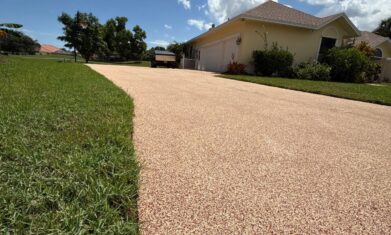
V & B Surface Solutions installs Revaflex EPDM concrete coating on suitable existing concrete. The system is designed to provide a textured, slip-resistant surface, with resistance to heat and UV exposure. The product offers 45% force reduction compared with bare concrete. These surface characteristics do not correct structural cracks, settlement, or ongoing movement.
Many installations typically take 1–2 days, but evaluation, repairs, site conditions, and product cure requirements can affect the schedule. Ask how the condition of your slab affects the project timeline and how the stated lifetime warranty applies to your specific installation.
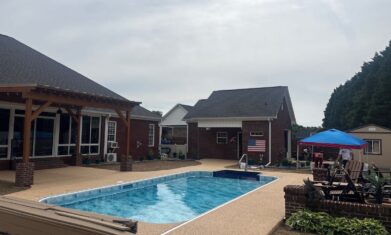
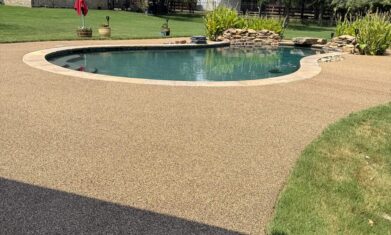
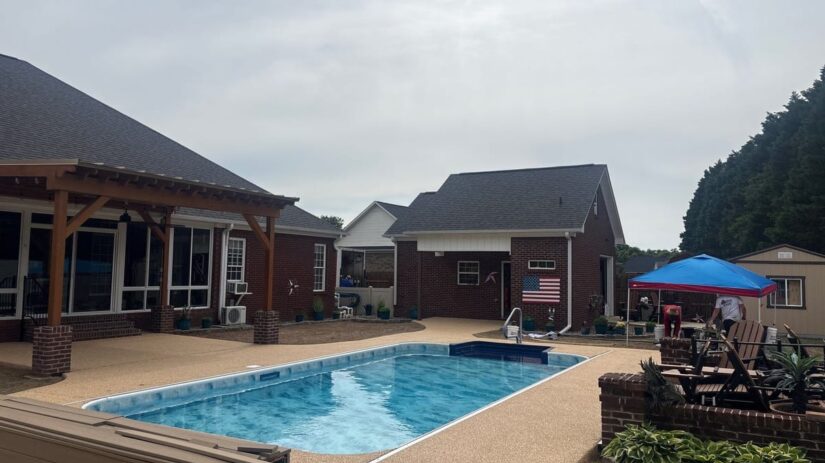
For pool deck projects, the coating applies to the surrounding concrete walking surface only. It is not applied inside the swimming pool.
Learn more about V & B’s pool deck concrete coating, driveway and walkway coating, and patio coating.
Get the concrete assessed before coating
A stable, minor crack may be repairable before a concrete coating is installed. A crack linked to active movement, settlement, drainage problems, or significant deterioration needs evaluation first. The coating is a finish, not a substitute for diagnosing and correcting the cause.
Share photos and the crack’s history when you request an assessment. Ask what preparation is needed, how the crack will be treated, and what the warranty covers. To discuss your concrete, request an assessment or quote or call (830) 652-1999.